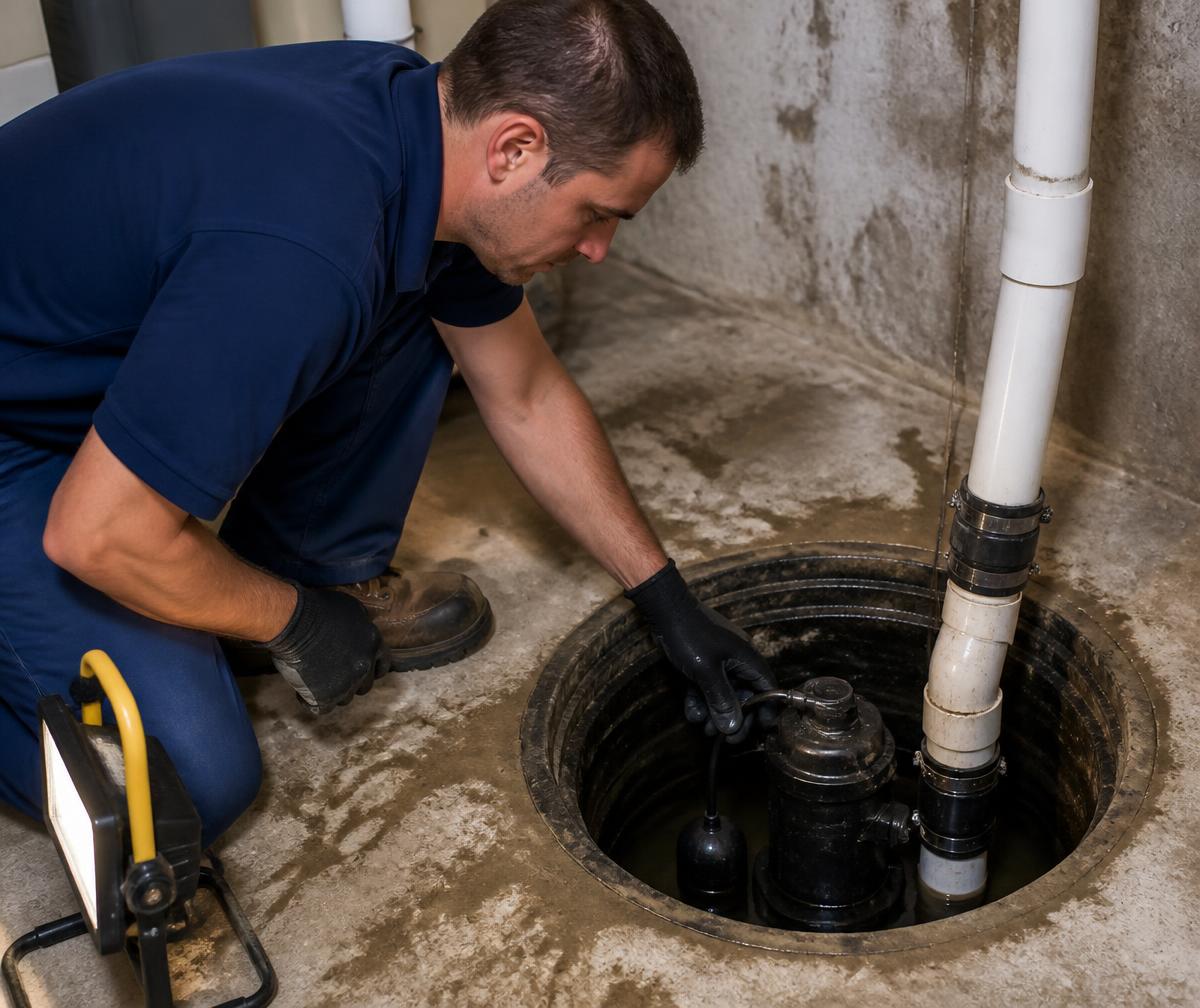
Common sump pump problems
- The pump does not start even though the pit is filling
- The motor hums or vibrates but no water leaves the pit
- The pump cycles on and off every few seconds
- The pump runs continuously and the level never drops
- Water returns to the pit immediately after each cycle
- The pump is noticeably noisier or hotter than it used to be
- The pit overflows during heavy rain despite the pump running
Float switch problems
The float is the most common single point of failure. It can catch on the side of the pit or on the discharge pipe, become tangled in a power cord, sit at the wrong height after the pump has shifted, or wear out electrically. A pump that works when you lift the float by hand but not on its own is almost always a switch issue rather than a motor issue.
Check valve issues
A failed or missing check valve lets the column of water in the discharge pipe fall straight back into the pit when the pump stops. The pump then restarts moments later, which is why short repeated cycling is a classic sign. Beyond the wasted run time, that pattern shortens the life of the pump.
Discharge line faults
The discharge line is outdoors, which means it is exposed to ice, debris and grading problems. A frozen or blocked outlet, or a line that daylights too close to the foundation, can leave a healthy pump running against an obstruction or simply recirculating the same water back to where it came from.
Troubleshooting and inspection
Diagnosis starts with the pit itself: water level, debris, how the pump is seated, and where the float sits at rest. Then the pump is tested through a full cycle to confirm it starts, moves water, and shuts off by itself. The discharge line and check valve are checked from the pit through to the outside outlet, along with the power supply and how the circuit is protected. That sequence separates a switch problem from a pump problem from a discharge problem — a distinction that decides whether a repair or replacement is warranted.
Repair or replacement
Switches, check valves, discharge fittings and pit debris are all repairable. Replacement makes more sense when the motor has failed, when a unit has been running well beyond its service life, or when it is clearly too small for how often the pit refills. If your basement is a finished space or a rental unit, capacity and reliability carry more weight than they would in an unfinished basement.
Related plumbing services
Water reaching a basement floor is not always a pump problem. If a floor drain is backing up rather than the pit overflowing, drain cleaning or sewer repair is the relevant service. Moisture from a supply line is covered under leak repair. Pump service for a home is part of broader residential plumbing in St. Catharines, and a failure while water is rising is an emergency plumbing call.