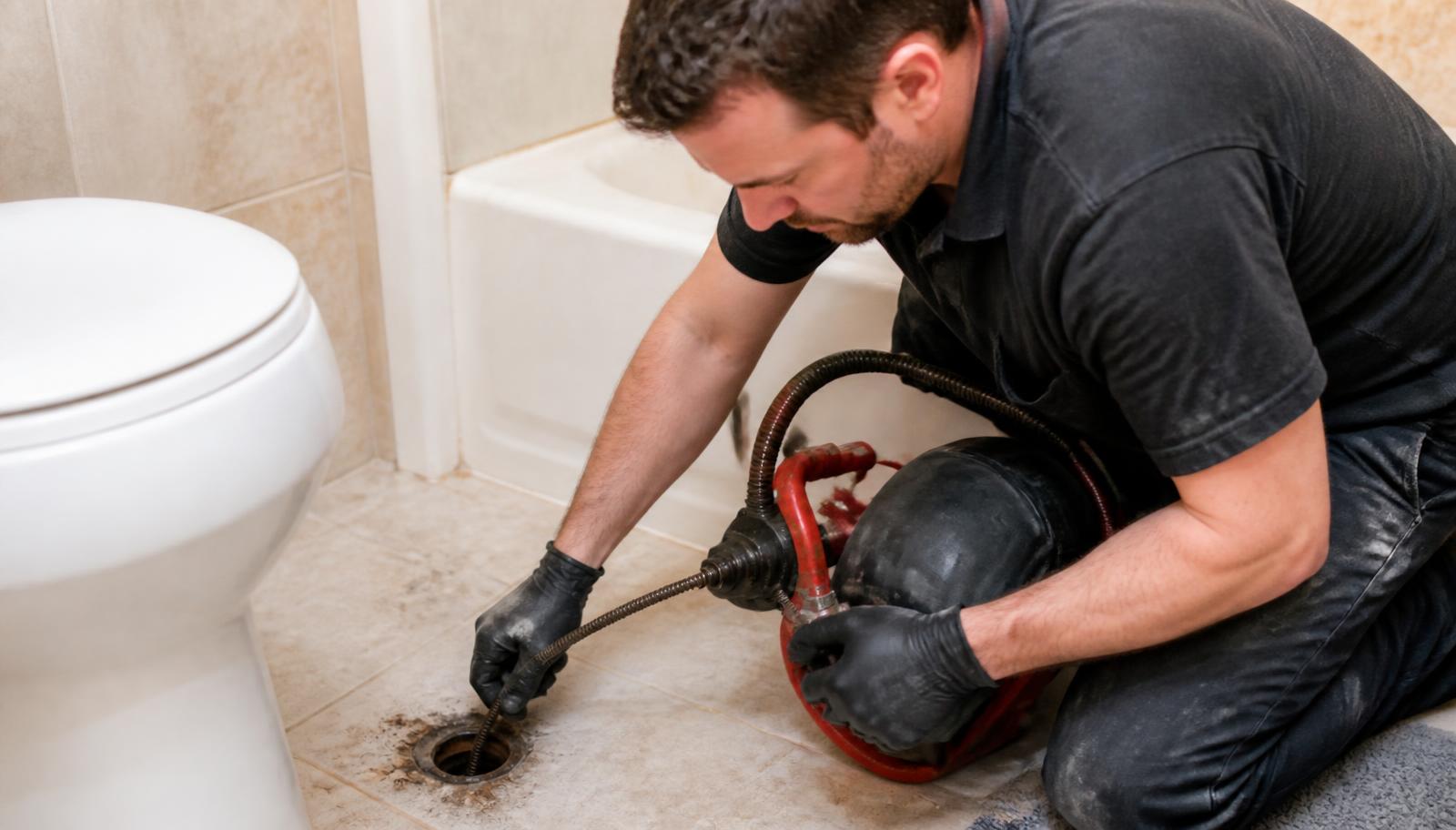
What drain cleaning actually involves
Drain cleaning means removing the blockage from inside the drain line, not masking the symptom at the fixture. Depending on where the restriction sits, that can mean clearing the trap under a sink, running a cable through a branch line, or working from a cleanout when the blockage is further downstream. The goal is a line that carries water away at full flow again, rather than one that drains just enough to hide the problem for another month.
Warning signs worth acting on
Drains almost always give notice before they stop entirely. Water that lingers in the basin after the tap is off, a shower that pools around your feet, a gurgle from the sink when the washing machine empties, or a faint sewage smell near a floor drain are all early indications that the line is restricted. When two fixtures on the same side of the house slow at once, the cause is usually shared piping rather than either fixture.
What causes drain blockages in local homes
- Cooking grease that cools and hardens against the inside of a kitchen line
- Food waste and coffee grounds building on an existing grease layer
- Hair combined with soap residue in bathroom and shower drains
- Bathroom products and wipes that do not break down in the line
- Sediment and debris settling in basement floor drains that see little use
- Pipe scale and corrosion narrowing the diameter of older drain lines
- Roots or a defect in the main line, which shows up as repeat blockages
Kitchen drains
Kitchen lines are the most predictable to diagnose because the material inside them is consistent: grease binds to the pipe wall and everything else sticks to the grease. A kitchen drain that has been slowing for weeks and then stops completely has usually built a layer along a long section of pipe rather than a single plug at the trap.
Bathroom drains
Bathroom sinks, tubs and showers block closer to the fixture more often, which is why the stopper assembly and trap are checked first. Persistent bathroom drainage problems in houses with more than one bathroom stacked above each other point toward the vertical stack instead.
Basement floor drains
Basement drains matter most in St. Catharines properties with laundry, a basement apartment, or a finished lower level, because they are the lowest opening in the system. If a floor drain backs up while a fixture upstairs is running, that is worth treating as a drainage problem in the main line rather than in the drain itself.
How the blockage is located
Inspection starts with which fixtures are affected and in what order they slow, because that narrows the section of pipe involved before anything is opened. From there the trap and accessible branch lines are checked, and where the pattern suggests the main line, a camera inspection can confirm the condition inside the pipe. That distinction matters: a blockage caused by build-up and a blockage caused by a damaged line need different work.
When a blocked drain is more than a drain problem
Repeat blockages in the same line, more than one fixture backing up together, water rising at a floor drain, or sewage odour throughout a basement generally indicate the main wastewater line rather than the branch. In that case sewer repair in St. Catharines is the more relevant service, and a camera inspection is the sensible first step. If the blockage has also damaged a joint or section of pipe, pipe repair may be needed alongside the drain work.
When to call a plumber
Call when a plunger and cleaning the trap have not restored flow, when the same drain keeps blocking, when water backs up into a second fixture, or when a basement drain overflows. If water is actively spreading across a floor, treat it as an emergency plumbing situation and call rather than waiting on a form.