Why sewer backups happen
The sewer line is the single pipe everything else drains into, which is why a fault there affects the whole building at once. Blockages build where flow slows — at a joint that has shifted, a section that has lost its slope, a bend where solids catch, or anywhere the inside diameter has been reduced. Once capacity drops below what the household produces, wastewater comes back up through the lowest opening.
Common causes in older and renovated properties
- Root intrusion at joints and hairline cracks in older clay or cast-iron lines
- Cracked or broken sewer pipe from ground movement or age
- Offset joints where two sections no longer line up
- Sags or bellies in the line that hold water and collect solids
- Grease and solids accumulating on an existing restriction
- Wipes and non-flushable products catching at a defect
- Poorly executed changes from a previous renovation or addition
Sewer inspection comes first
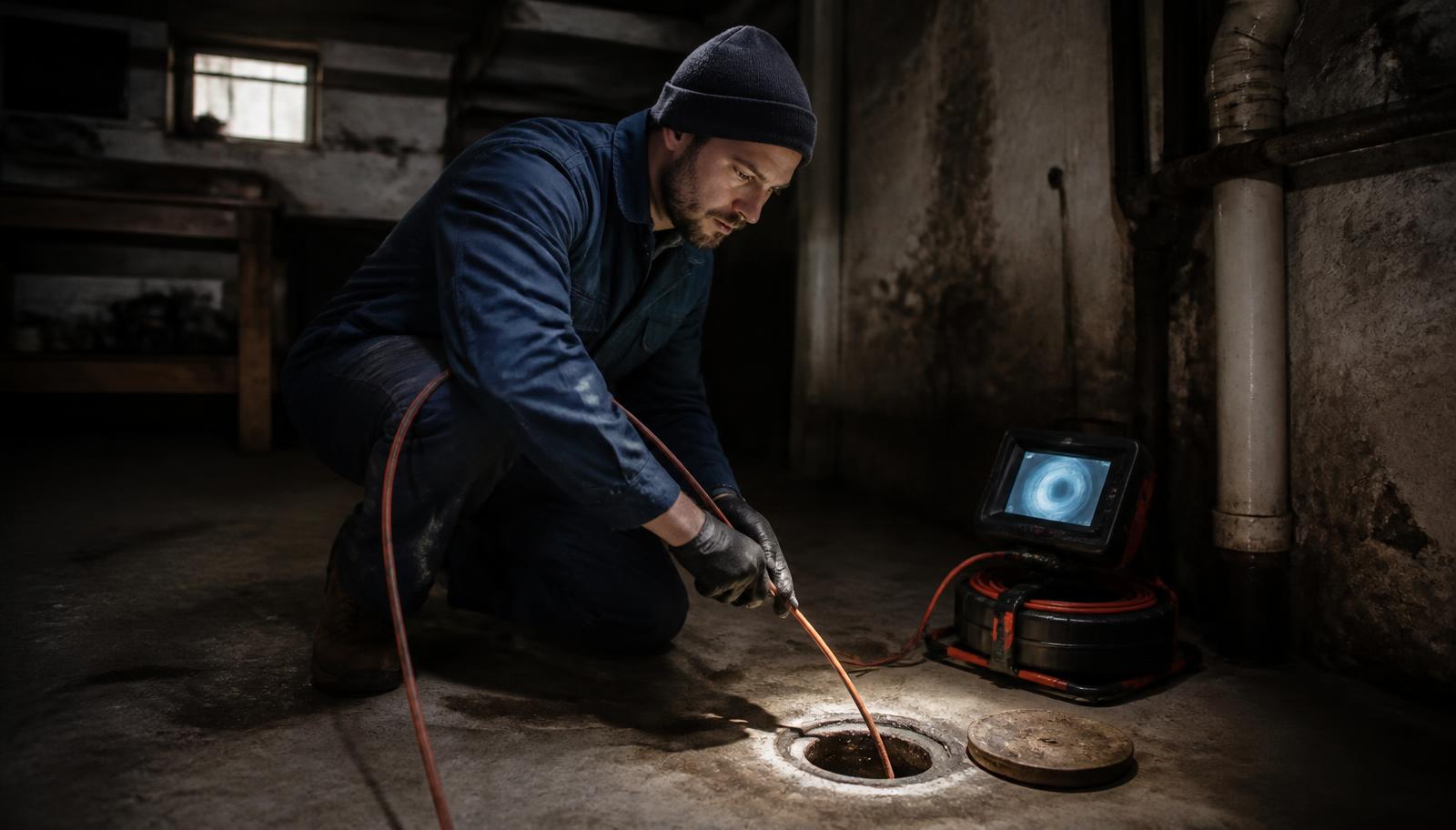
Sewer work is one area where inspection genuinely changes the outcome. A camera run through a cleanout shows what the line looks like inside and where the trouble is — the difference between a line that needs clearing and a line with a broken section is not something you can judge from the symptoms alone. It also establishes how far along the line the problem sits, which matters for planning any excavation or repair.
Repair approaches
What happens next depends on the finding. A line blocked by build-up or roots may only need to be cleared and then re-inspected to confirm the pipe underneath is sound. A cracked, offset or collapsed section needs the defective length addressed rather than cleaned. Where the damage is confined to one area, repair is generally limited to that section instead of the full run — one reason a specific diagnosis is worth the time it takes.
Reducing the chance of a repeat
After a line is restored, a few habits make a measurable difference: keeping grease out of kitchen drains, not flushing wipes or hygiene products, and taking early notice when a floor drain or basement fixture starts behaving differently. For properties with a known history of root intrusion, periodic inspection is more useful than waiting for the next backup.
Related plumbing work
Sewer and drain problems overlap constantly. If the issue turns out to be limited to one fixture's branch line, drain cleaning in St. Catharines is the right service. Damage to a section of pipe is handled as pipe repair. Where a backup is happening while you read this, treat it as emergency plumbing and call. For multi-unit and commercial buildings, sewer work is coordinated through commercial plumbing service.