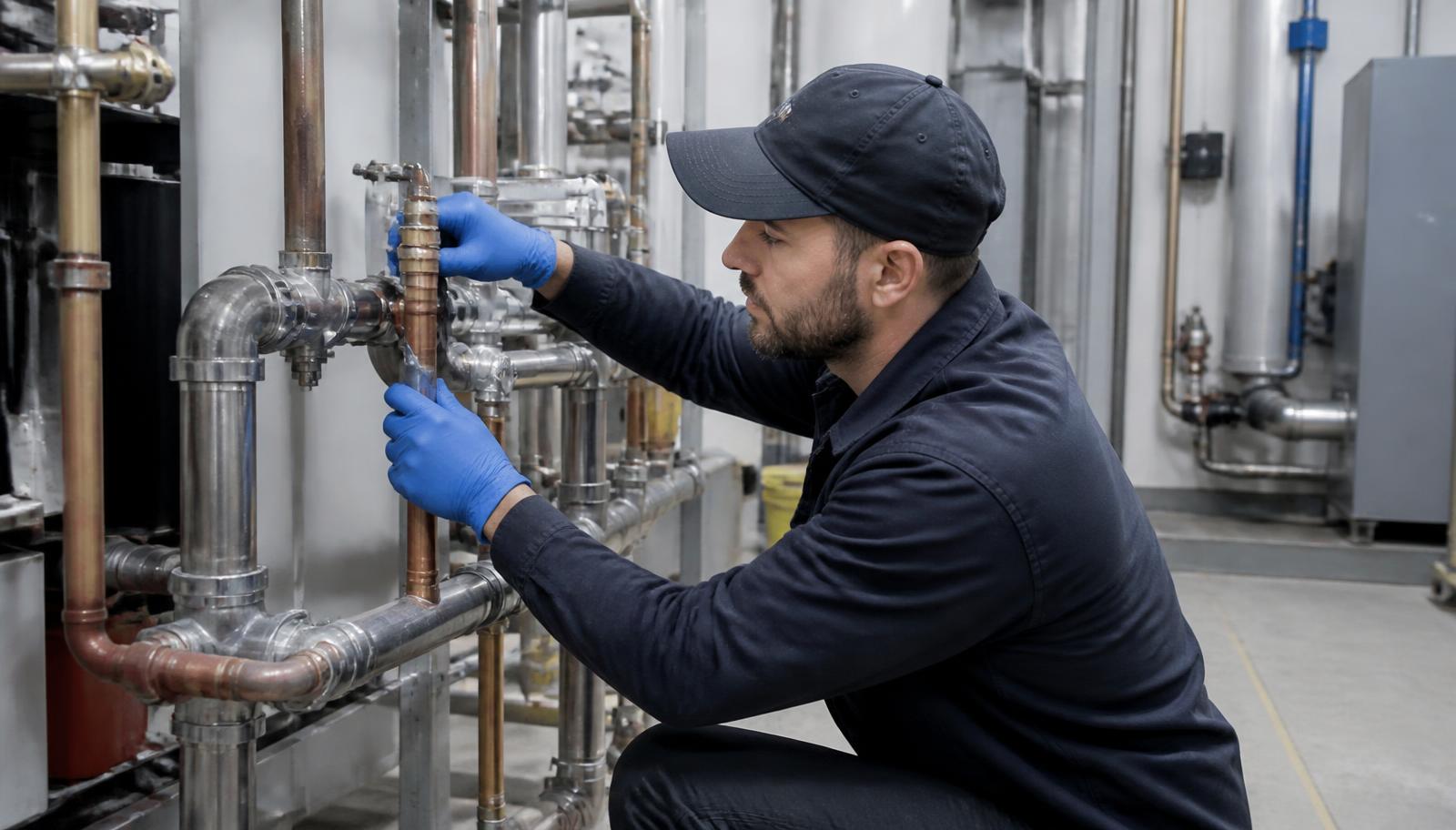
Why commercial plumbing problems behave differently
The plumbing itself is not exotic — the demand on it is. A washroom used by two people at home and one used by two hundred people a day age at completely different rates. Commercial drains carry more volume, more solids and, in food premises, far more grease. Fixtures see heavier handling. Faults therefore tend to recur on a schedule rather than at random, which is why the pattern of failures is often as informative as the failure itself.
Drainage in commercial spaces
Drainage is the most frequent call. Washroom lines block from paper products and hygiene items; kitchen lines block from grease and food waste that cool and set inside the pipe; floor drains in back-of-house areas collect debris until they overflow at the worst moment. Clearing the line matters, but so does understanding where the material is coming from — a drain that blocks every eight weeks is describing its own cause. Related work is covered on the drain cleaning page, and shared or main-line problems under sewer repair.
Leaks and pipework in service areas
Leaks in commercial buildings are often found in the places nobody visits daily: service corridors, mechanical rooms, ceiling voids between tenancies and above suspended ceilings. A connection weeping above a retail unit can mark tiles or stock before anyone traces the source. Inspection and repair of connections, valves and damaged pipework is handled the same way as it is described on the leak repair and pipe repair pages, with the added step of identifying which tenancy or shared system the pipework belongs to.
Coordinating work around a business
The practical constraint in commercial work is rarely the plumbing — it is access, timing and who needs to be informed. Service hours from 7 AM to 11 PM allow work to be scheduled before opening or after closing where the fault allows it. Where a building has an on-site manager or superintendent, arranging access through them and confirming what was found and completed keeps records straight for the property.
Working with property managers
For managed buildings, the useful information is usually the same each time: which unit, what the tenant reported, whether the affected plumbing is inside the tenancy or shared, and whether this has happened before. That last point often changes the recommendation, because a repeat fault in shared drainage is a different problem to a one-off blockage inside a single unit.
Urgent commercial issues
When water is entering a sales floor, a washroom is out of use during trading hours, or drainage has stopped in a food premises, calling is faster than any form. Emergency plumbing covers urgent attendance within service hours. For residential portions of mixed-use buildings, see residential plumbing.